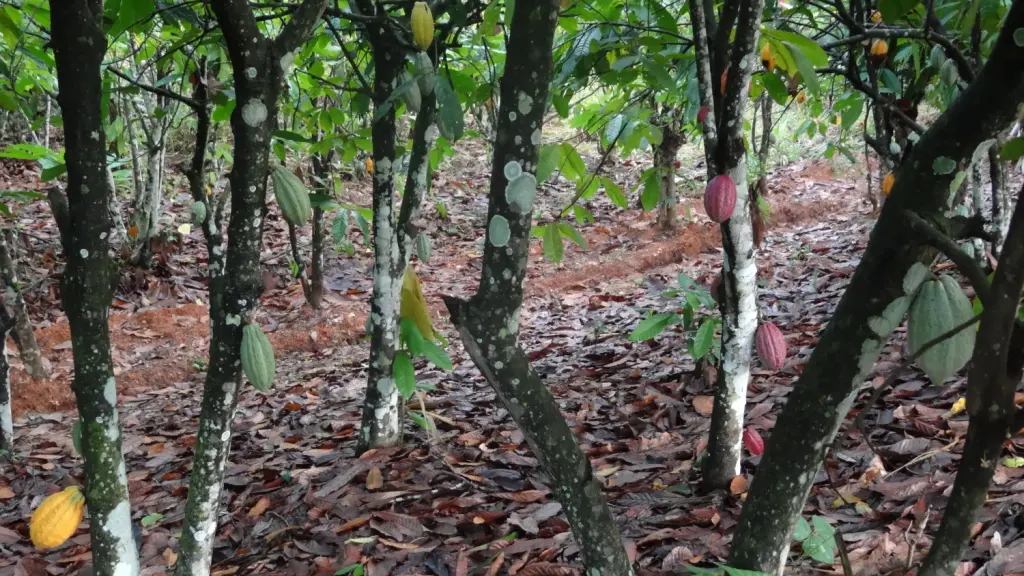
Researchers from the National Center for Agronomic Research (CNRA) have developed eleven cocoa varieties whose drought resistance trials are considered satisfactory, according to an AFP report published on October 15. Conducted notably in Divo, in the south of Côte d’Ivoire, this work aims at future commercialization; it does not yet constitute an announcement of distribution to planters.
Scientists cross selected varieties, then subject the offspring to different levels of water deprivation in a greenhouse. Laboratory observations complement these tests to understand the mechanisms of resistance. Geneticist Caudou Trebissou, interviewed by the agency, places the beginning of this research on water resilience in the 2010s.

The selection of plants is accompanied by work on their growing environment. Agronomist Maryse Assi explains to AFP that associating them with shade trees can extend their productive lifespan. The announced results therefore also concern the conditions under which these cocoa trees will be cultivated.
Alongside these trials, the methods for multiplying plant material have been strengthened. The CNRA announced in August that it had received ownership of a somatic embryogenesis laboratory in Adiopodoumé from ICRAF. This technique notably allows for the multiplication of selected plant material in the laboratory and the preservation of genetic resources. The transfer was formalized on July 29.
Another project is set to expand the scientific framework: the government announced on September 23 the creation of the Coffee and Cocoa Institute, named I2C. Its mission focuses on the competitiveness of the two sectors and the mastery of global market standards, with cooperation between universities, regional centers, and international organizations.
According to the government statement, the complex is planned on a CNRA station that already houses gene banks as well as experimental plots of coffee and cocoa.