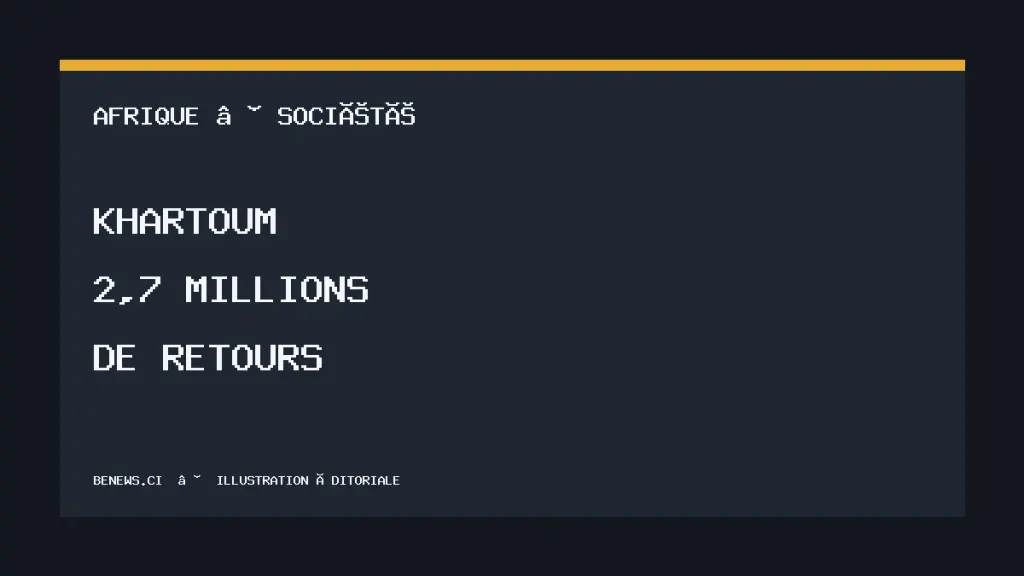
Nearly 2.7 million people have returned to Khartoum since the Sudanese army regained control of the capital, but a large portion of the residents are returning to a city where access to water, electricity, healthcare, and employment remains severely degraded.
Approximately four million people had fled the Khartoum metropolitan area following the outbreak of war in April 2023 between the army and the Rapid Support Forces (RSF). The massive return observed since the recapture of the capital does not, however, signify a return to normalcy.
A liberated capital, but still paralyzed
In several neighborhoods, electrical networks remain unstable, public services are operating at a slow pace, and many businesses have not resumed their activities. Shortages of medication and difficulties in finding employment are prompting some families who have returned from Cairo or other cities to consider starting anew.
The destruction represents another obstacle. Many buildings have been damaged by the fighting, and some areas remain exposed to unexploded ordnance. The return of residents simultaneously increases the pressure on the infrastructure that is still operational.
The economic situation adds an additional difficulty. The Sudanese pound depreciated sharply in 2026 in areas controlled by the army, which increases the cost of essential goods at the very moment when needs are rising with the return of displaced persons.
Khartoum thus embodies a paradox: the return of millions of residents reflects the desire to rebuild a life in the capital, but the material conditions remain fragile enough to drive some of them to leave again.