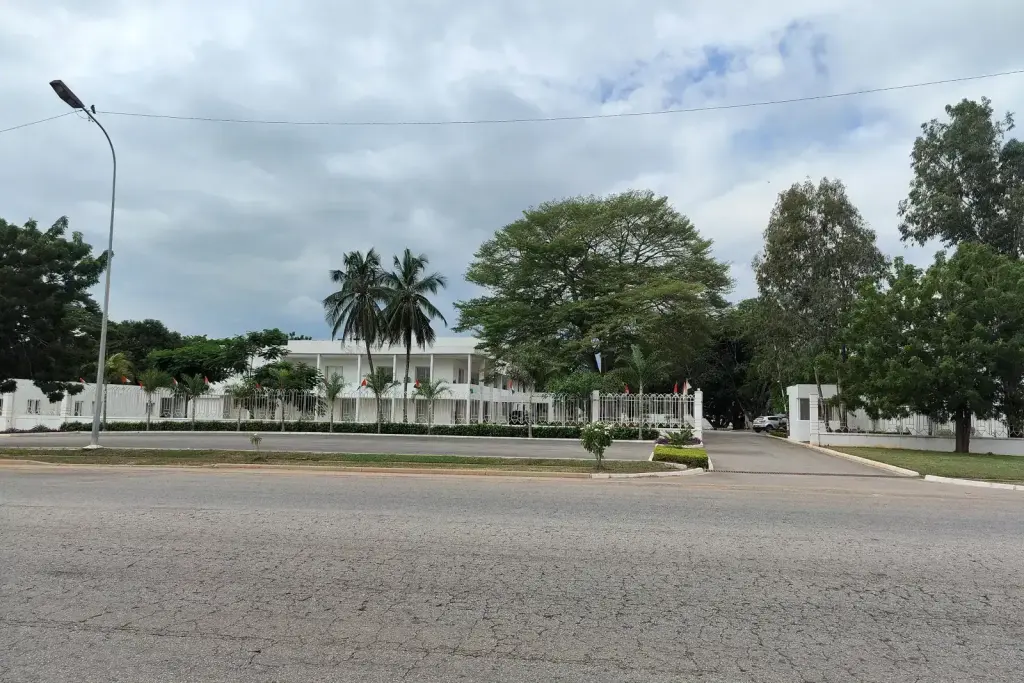
The Ivorian Senate unanimously adopted, on Thursday, November 5, 2026, in Yamoussoukro, the bill authorizing the President of the Republic to ratify the agreements concluded with the United States to finance the Regional Compact Program for Energy.
The arrangement includes a $300 million grant from the Millennium Challenge Corporation and an Ivorian contribution of $22.5 million, bringing the total program budget to $322.5 million. It aims to modernize the national grid and increase the net amount of electricity traded by Côte d’Ivoire on the West African market.

The energy project accounts for $245.4 million in the MCC’s detailed budget. It combines support for the ECOWAS regional market, the modernization of the Ivorian grid, and the strengthening of the regulatory, financial, and operational capacities of sector stakeholders.
The announced investments must focus on tools, equipment, and critical network infrastructure, including battery storage devices. The program also plans to establish a regional market allowing the purchase and sale of electricity on the day before its delivery.
The Senate vote follows the examination of the text by the National Assembly. The grant agreement was signed on September 16, 2025, while the implementation agreement was concluded on April 16, 2026, between Côte d’Ivoire and the United States.
Parliamentary authorization is required pursuant to Article 120 of the Constitution, as certain provisions derogate from Ivorian law. These notably concern tax exemptions as well as the conditions for terminating indefinite-term employment contracts and the payment of corresponding compensation by the State.
The contractual amount of the donation remains set at 300 million dollars. The government had converted it to 171.65 billion CFA francs in August, while the Senate proceedings used an equivalent close to 182 billion. These two amounts in CFA francs refer to the same financing in dollars and do not constitute two separate allocations.
Ratification was expected before November 12, 2026, according to the schedule presented to parliamentarians during the review of the text.