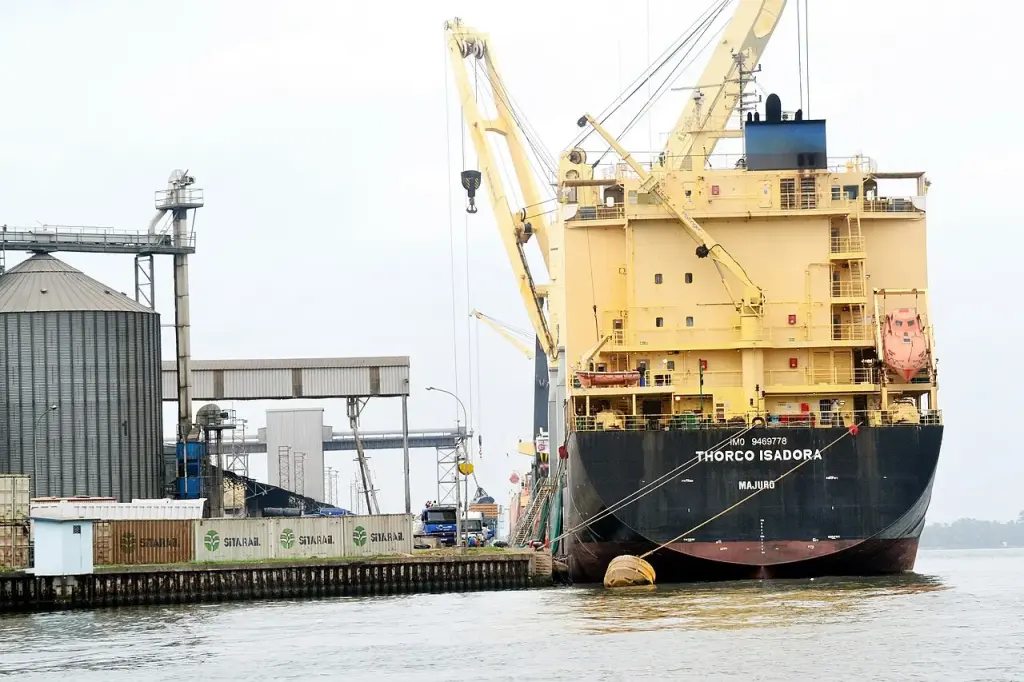
On Friday, October 16, 2026, Côte d’Ivoire completed an interagency exercise in Abidjan involving 66 participants to test its response chain against maritime drug trafficking. The simulation focused on the interception of a vessel suspected of carrying cocaine and did not correspond to an actual seizure.
The operation conducted from October 12 to 16 assessed the various stages of an intervention, from intelligence gathering and ship targeting to boarding, searching, evidence preservation, and the transfer of the case file to the judicial authority. The practical phase took place on October 14 and 15 off the coast of Abidjan.
The Navy, customs, police, gendarmerie, maritime affairs, justice, the Autonomous Port of Abidjan, and the Ministry of Foreign Affairs participated in the exercise. The offshore patrol vessel Contre-Amiral Fadika and the Navy Operational Center were mobilized for the intervention and coordination sequences.
Before the simulation, the participants underwent three days of training and mentoring at the Interregional Maritime Security Institute. The work focused on the legal framework, intelligence sharing, search techniques, and judicial procedures designed to maintain continuity between action at sea and prosecutions.
The Permanent Secretariat of the Interministerial Committee for State Action at Sea coordinated the operation with the support of the Autonomous Port of Abidjan and the Interregional Maritime Security Institute. The debriefing held on October 16 at the port is intended to identify the necessary adjustments in information sharing and the distribution of responsibilities among administrations.
The exercise is part of the SCOPE Africa and SEACOP projects, funded by the European Union. SCOPE Africa aims to strengthen security, risk management, and governance of ten strategic ports in West and Central Africa, including Abidjan, Dakar, Lomé, Lagos, Douala, and Monrovia.
The SCOPE Africa program has European funding of 12 million euros and is scheduled to continue until January 31, 2029. Its implementation is entrusted to Expertise France and the Belgian agency Enabel in the ten participating ports.