Taï National Park and the Cavally Nature Reserve had respectively completed 84% and 80% of their 2026 operational plans by the end of September, according to a report presented on Wednesday, October 21, in Guiglo by the Ivorian Office of Parks and Reserves.
The rates were communicated during a quarterly monitoring workshop bringing together officials from the OIPR, representatives of the Cavally regional council, researchers, technical and financial partners, as well as local communities. The review was intended to assess the progress of scheduled activities, identify gaps, and establish corrective actions.

Both areas are managed by the southwest zone directorate of the OIPR. Taï National Park follows a management and development plan covering the period from 2020 to 2029, while the Cavally Reserve is still operating under an emergency plan pending its own development plan.
The announced level for the Taï park already exceeds the 75% performance rate published for the entirety of 2025. For the Cavally reserve, the end-September result remains close to the 82% announced at the end of last year.
These data are not directly comparable, however, as they neither cover the same period nor necessarily the same scope of evaluation. The 2026 report measures the execution of activities up to the third quarter, whereas the previous figures related to the full fiscal year.
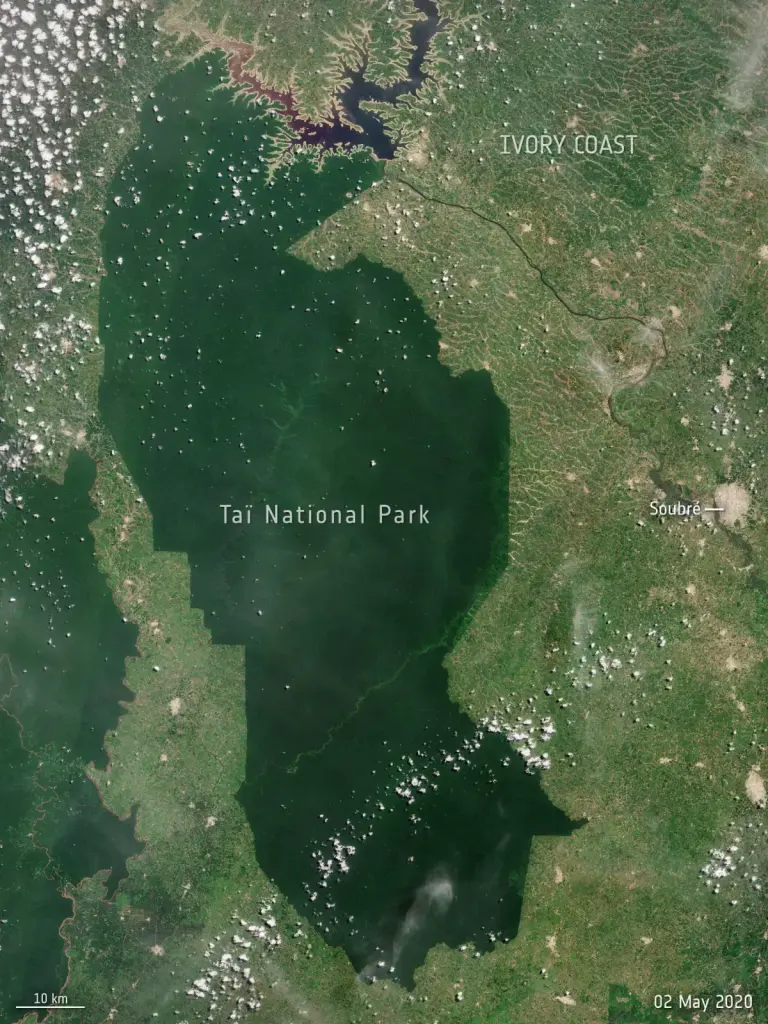
Listed as a UNESCO World Heritage site, Taï National Park is one of the last large blocks of primary tropical forest in West Africa. The international organization notes the presence of endangered species, including the pygmy hippopotamus and eleven species of monkeys.
Created in 2023, the Cavally Nature Reserve extends this forest massif and contributes to the ecological corridor linking Côte d’Ivoire to the Grebo-Krahn and Sapo parks in Liberia. The 2026 plans notably focus on monitoring, ecological tracking, research, ecotourism, local development, and participatory management.