Researchers from the National Center for Agronomic Research contested on Friday, November 27, 2026, in Abidjan-Cocody the project to transfer seven of their twenty programs as well as scientific assets to the Coffee and Cocoa Institute, just days after the official presentation of the new structure.
In a statement read by Dr. Edmond Koffi on behalf of the CNRA researchers’ union, they expressed support for strengthening research on both crops while rejecting the proposed private law foundation status for the I2C, its attachment to the Coffee-Cocoa Council, and the announced transfer of teams, seeds, genetic collections, and intellectual property.
The Council of Ministers adopted a communication on September 23 regarding the creation of the I2C. The official text provides for its establishment on the site of the CNRA station in Divo, which houses gene banks and mature experimental plots of coffee and cocoa, with the mission to strengthen research and mastery of global market standards.
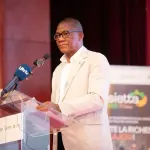
The Coffee-Cocoa Council presented the project to the scientific community on November 23. Its Director General, Yves Brahima Koné, stated that the new institute should mobilize more resources for applied research on sustainability, climate change, quality, and traceability. The institution’s research manager, Mathias Tahi Gnion, assured that the I2C would not replace universities or existing centers.
Researchers state that the project would target programs dedicated to cocoa and coffee-cola as well as five cross-cutting programs related notably to biotechnology, soils, the environment, and agricultural processing. They believe that such a transfer would also affect work conducted on rubber, cashew, and food crops.
They also fear an interruption of breeding cycles that can last from fifteen to twenty years, while the orchards face swollen shoot, aging, and the effects of climate change. The union specifically highlights the work carried out in Divo on cocoa hybrids, high-yield coffee clones, and the so-called Mercedes varieties.
The researchers propose a multi-year funding agreement between the Coffee-Cocoa Council and the CNRA, the reconstruction of the Divo station, and the creation of a coffee-cocoa hub within the center with shared governance. They request the initiation of consultations with the relevant ministries.
The Coffee-Cocoa Council, for its part, maintains that the I2C must work in complementarity with the CNRA, universities, and other research organizations in order to pool scientific expertise.